The new Behavioral Economics Today Podcast explores how behavioral data is becoming the liquid gold propelling businesses into the future.
When Hugh Massie founded DNA Behavior in 2001, he set out with a simple but powerful belief: understanding how people think and make decisions would transform how organizations operate. More than two decades later, that vision is not only proving true, it’s reshaping how businesses use data, AI, and behavioral science to drive outcomes.
In the pilot episode of the Behavioral Economics Today Podcast, Hugh reflects on that journey and explains how behavioral data, when combined with AI, is becoming one of the most important business assets of the future.
Aligning People and Numbers
Hugh’s journey to see through the lens of people began in the field of accounting.
Early in his career, he worked as a CPA, delivering traditional, numbers-driven advice to clients. But over time, he noticed something the spreadsheets weren’t capturing—decisions weren’t driven by numbers alone. Instead, they were driven by people.
This realization reframed his entire approach. To achieve better outcomes, organizations needed to understand both dimensions: the quantitative and the human. Or as Hugh describes it, aligning quanta and qualia.
A person’s relationship with money, their motivations, and their tolerance for risk often matter just as much as the numbers themselves. And aligning advice with this information had the potential to significantly reduce the stress of financial decisions.
“The only way we can deal with health and money is to have a very precise, deep understanding of the human first.”
From that point forward, Hugh leaned into behavioral science, working to identify, measure, and apply behavioral insights in ways that help organizations better understand and serve people.
“If we get the people part right, I think you'll find the numbers take care of themselves.”
This shift laid the foundation for what would eventually become DNA Behavior.
Using AI to Humanize Data
For more than 25 years, DNA Behavior has helped leaders, coaches, consultants, and advisory firms build deeper behavioral awareness and apply it in practice. But as data systems evolved, so did the opportunity to make behavioral insights more accessible.
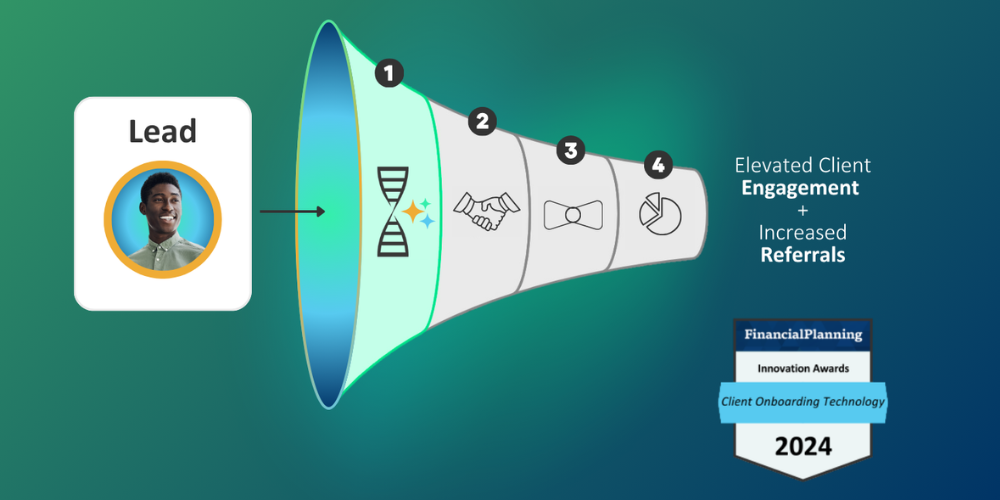
So, in 2024, DNA Behavior took a major step forward by reverse-engineering its psychometric system to deliver behavioral insights instantly and at scale.
Rather than relying solely on traditional assessments, the platform now uses AI-driven technology to identify behavioral patterns without requiring manual questionnaires. Through a Digital Scan, it analyzes a person’s digital footprint using open intelligence sources and enriches client systems with behavioral data.
“The future is not understanding behavior; it’s understanding behavioral data.”
This shift changes the experience entirely. Behavioral insights are now immediate, frictionless, and embedded directly into workflows—allowing organizations to personalize interactions, improve decision-making, and eliminate the delays associated with traditional reporting.
Applying Behavioral Data at Scale
As powerful as this is, the underlying science is not new.
For decades, behavioral scientists have studied how biases, emotions, and cognitive patterns influence human decision-making. What has changed is not the science, but the ability to apply it at scale. Generative AI is making that possible.
“We've got to understand behavior because it is at the epicenter of everything, even in this automated world of AI.”
With AI, behavioral principles can now be operationalized across entire organizations, embedding personalization and human understanding directly into systems and workflows that were previously static.
The Next Generation of Behavioral Finance
To understand where this is headed, it helps to look at the evolution of Behavioral Finance, shaped by pioneers like Daniel Kahneman and Meir Statman.
1st Generation – Irrationality
Recognized that humans do not always make fully rational financial decisions.
2nd Generation – Biases
Identified cognitive biases and heuristics that influence decisions.
3rd Generation – Whole Person Behavior
Expanded the model to a holistic perspective that includes emotional drivers, values, and well-being.
Today, we are firmly in the third generation. This deeper understanding allows us to help people make better decisions aligned with how they naturally think and operate.
But a fourth generation is emerging, and it is already being built.
4th Generation – ✨Personalized Behavioral Intelligence
Operationalizes behavioral insights to deliver dynamically tailored experiences for individuals and segments.
AI Is the Catalyst for Personalization
At the core of this shift is data—specifically, behavioral data at scale.
The DNA Behavior platform measures more than 4,000 behavioral insights. AI is essential in extracting and interpreting this massive amount of information, whether it comes from assessments or Digital Scans.
These insights help organizations understand people as individuals, tailor messaging, align roles, build more effective teams, optimize decision-making, and match clients with the right advisors.
“Behavior is wrapped up in every action, every decision, every interaction that you have.”
When combined with CRM, HR, customer, or operational systems, behavioral data transforms static information into something far more actionable. It becomes a behavioral layer that sits beneath existing data, giving AI the context it needs to deliver meaningful personalization.
This enables a shift from one-to-one understanding to personalization at scale.
Why Is Behavioral Data “Liquid Gold”?
Unlike demographic or transactional data, behavioral data reveals how people actually make decisions, not just what they say, report, or appear to be on paper. When embedded into business systems, it becomes highly valuable, much like a natural resource that gains value when refined and applied.
It reveals motivations, decision-making patterns, communication preferences, and likely future actions. Most importantly, it enables organizations to personalize interactions in ways that were previously impossible.
“Personalization leads to extreme value creation opportunities that didn't exist before.”
With this level of insight, organizations can design more precise offerings, improve messaging, and deeply segment audiences, without limiting personalization to only their highest-value clients. Instead, they can scale meaningful connection across nearly every interaction.
Be the Next Podcast Guest
These are just a few of the highlights from the introductory episode of the Behavioral Economics Today Podcast.
In future episodes, Hugh will speak with innovative individuals who are applying behavioral science in practical, impactful ways across business and life. The focus is on bridging psychology and economics—and turning insight into action.
Are you working with human behavior in a unique way? Or is there a related topic you’d like to discuss with Hugh?
Apply to be our next guest!


 Leon Morales

 Sajid Sabreen : November 17, 2025

 Hugh Massie
 Leon Morales